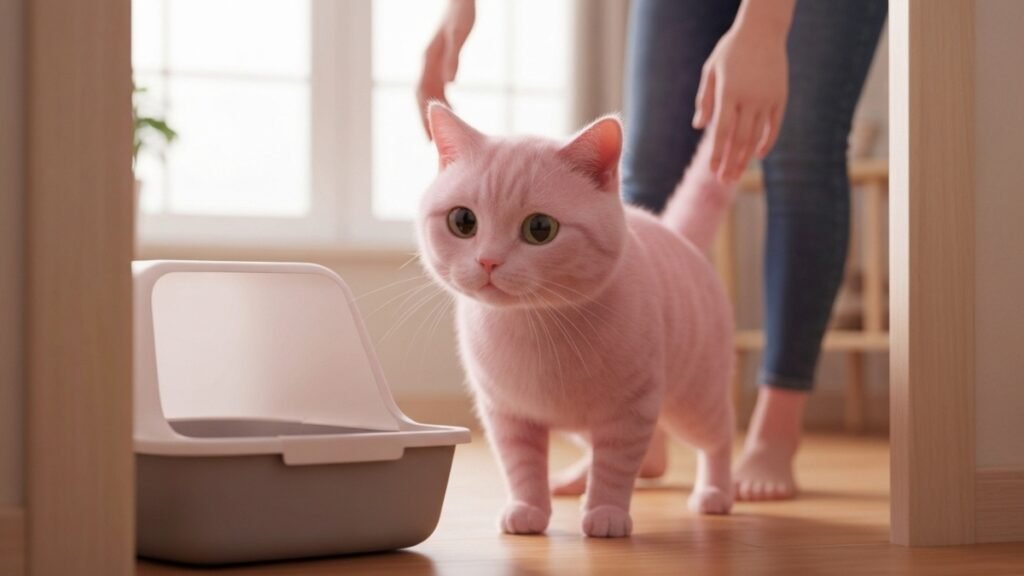
Why My Cat Not Using the Litter Box? Few things unsettle a cat parent more than finding that dreaded spot outside the litter box. Before frustration sets in, pause—your cat is trying to tell you something.
According to experts at the Cornell Feline Health Center and UC Davis Veterinary Medicine, litter box refusal is rarely misbehavior; it’s a signal of stress, discomfort, or medical distress. Whether it’s a urinary issue, territorial tension, or subtle environmental change, your feline is communicating a need for help.
This guide reveals the most common causes, vet-backed fixes, and proactive steps to bring peace, cleanliness, and comfort back to your home. Let’s decode what your cat’s behavior truly means—so you can respond with confidence, not confusion.
Understanding Why Cats Stop Using the Litter Box
When your cat suddenly avoids the litter box, it’s not a sign of misbehavior—it’s a form of communication. Cats are naturally clean animals, and a sudden change in their toileting habits often indicates an underlying issue. Understanding these reasons can help you address the problem effectively.
1. Medical Issues
Health problems are among the most common reasons cats stop using their litter box. Painful conditions such as urinary tract infections (UTIs), bladder stones, or feline lower urinary tract disease (FLUTD) can make urination uncomfortable. Cats may then associate the litter box with pain and avoid it entirely.
According to the Cornell Feline Health Center, any medical issue that disrupts a cat’s normal urination or defecation can cause house soiling. Inflammation, discomfort, or increased urgency can lead to accidents outside the box.
The VCA Animal Hospitals also warn that untreated urinary issues can quickly become severe, so a vet checkup should be your first step when litter box habits change.
2. Environmental Stressors
Cats are creatures of habit. Changes in their surroundings—such as moving to a new home, new pets or people, loud noises, or even rearranging furniture—can trigger anxiety. This stress often manifests through behaviors like house soiling or litter box avoidance.
The American Association of Feline Practitioners (AAFP) and International Society of Feline Medicine (ISFM) jointly emphasize that providing cats with predictable routines, hiding spots, and quiet zones dramatically reduces stress-related litter box problems.
Keeping your cat’s environment calm and enriched with toys, scratching posts, and resting areas can help restore normal litter box behavior.
3. Litter Box Preferences
Cats can be surprisingly picky about their litter box setup. Common factors that cause avoidance include:
- Dirty litter boxes
- Strongly scented litter
- Boxes that are too small or too enclosed
- Locations that feel unsafe or too busy
The AAFP/ISFM Environmental Needs Guidelines recommend that each litter box should be at least 1.5 times the cat’s body length and kept meticulously clean.
A 2024 study in the NIH’s PMC database also found cats strongly preferred larger boxes and clumping clay litter, confirming what many veterinarians already advise.
4. Multi-Cat Household Dynamics
In multi-cat homes, competition for litter boxes is a silent but common cause of stress. Cats are territorial, and if another cat blocks or uses their box, they may avoid it altogether.
The AAFP/ISFM House-Soiling Guidelines recommend providing one litter box per cat, plus one extra, spread across quiet, accessible locations. This simple rule minimizes competition and gives each cat a sense of ownership and security.
5. Behavioral Conditioning
Sometimes, avoidance stems from negative associations. A cat that experienced pain during urination may now link the litter box to that discomfort, even after healing.
As outlined by AAFP/ISFM House-Soiling Guidelines, this isn’t spite or misbehavior—it’s a learned fear response. The solution is to rebuild positive associations through clean, quiet, easily accessible boxes and gentle encouragement, never punishment.
Practical Solutions to Encourage Your Cat to Use the Litter Box
If your cat is avoiding the litter box, it’s essential to address the underlying causes with patience and understanding. Implementing the following strategies can help create a more inviting environment for your feline friend.
1. Ensure Proper Litter Box Setup
A suitable litter box is crucial for your cat’s comfort and hygiene. The American Association of Feline Practitioners (AAFP) and the International Society of Feline Medicine (ISFM) recommend the following guidelines:
- Quantity: Provide one litter box per cat, plus one extra. For example, in a two-cat household, offer at least three litter boxes.
- Location: Place litter boxes in quiet, low-traffic areas to minimize stress.
- Size: Choose boxes that are large enough for your cat to turn around comfortably.
- Type of Litter: Use unscented, clumping litter, as many cats prefer it.
- Cleaning: Scoop the litter box daily and clean it with mild detergent weekly to maintain hygiene.
Reference: AAFP/ISFM House-Soiling Guidelines
2. Address Medical Issues Promptly
If your cat is experiencing pain or discomfort, it may avoid the litter box. Conditions such as urinary tract infections (UTIs), bladder stones, or arthritis can cause pain during elimination. The Cornell Feline Health Center advises that any medical condition interfering with a cat’s normal urination or defecation behavior can lead to litter box problems.
Reference: Cornell Feline Health Center – House Soiling
3. Reduce Environmental Stressors
Cats are sensitive to changes in their environment. Stressful situations, such as moving to a new home, introducing new pets, or changes in routine, can lead to litter box avoidance. The AAFP and ISFM emphasize the importance of providing a stress-free environment for cats to prevent behavioral issues.
Reference: AAFP/ISFM Environmental Needs Guidelines
4. Provide Multiple Litter Boxes in Multi-Cat Households
In homes with multiple cats, competition for litter boxes can cause stress and lead to avoidance. The AAFP and ISFM recommend providing multiple litter boxes in different locations to ensure all cats have access and to reduce territorial disputes.
Reference: AAFP/ISFM House-Soiling Guidelines
5. Reintroduce the Litter Box Gradually
If your cat has developed a negative association with the litter box, reintroduce it slowly. Place the box in a quiet area and encourage your cat to use it by placing treats or familiar scents nearby. Gradually move the box to its desired location as your cat becomes comfortable.
Reference: AAFP/ISFM House-Soiling Guidelines
By implementing these strategies, you can help your cat feel more comfortable and secure, encouraging them to use the litter box consistently. Remember, patience and consistency are key in addressing litter box issues.
Advanced Strategies to Address Litter Box Avoidance
If your cat continues to avoid the litter box despite implementing basic solutions, it may be time to explore more advanced strategies. These approaches address deeper behavioral issues and environmental factors that could be contributing to the problem.
1. Consult a Veterinary Behaviorist
If your cat’s litter box avoidance persists, consulting a veterinary behaviorist can provide specialized guidance. These professionals can assess your cat’s behavior, identify underlying psychological factors, and develop a tailored treatment plan.
Reference: Wisconsin Humane Society – Solving Litterbox Issues
2. Implement Pheromone Therapy
Pheromone diffusers, such as Feliway, can help reduce stress and anxiety in cats. These synthetic pheromones mimic the natural ones cats produce to mark their territory as safe, promoting a sense of security and well-being.
Reference: ASPCA – Litter Box Problems
3. Reevaluate Household Dynamics
Changes in the household, such as new pets, renovations, or alterations in routine, can cause stress and lead to litter box avoidance. Ensure your cat has access to quiet, safe spaces and maintain a consistent routine to minimize stress.
Reference: PAWS – Preventing Litter Box Problems
By implementing these advanced strategies, you can address deeper issues contributing to your cat’s litter box avoidance. Remember, patience and consistency are key in helping your cat feel comfortable and secure.
Creating the Perfect Litter Box Environment — Vet-Approved Tips
Even after addressing medical and behavioral issues, the environment itself can make or break litter box success. Cats are highly sensitive to smells, space, and privacy, and small adjustments can lead to remarkable improvements. Here’s how to design a litter box environment that your cat will actually enjoy.
1. Litter Box Quantity & Placement
- Number of boxes: Rule of thumb — one box per cat, plus one extra. For a household with two cats, have three boxes in separate areas.
- Privacy matters: Cats prefer quiet, low-traffic locations. Avoid placing boxes near noisy appliances, washing machines, or busy corridors.
- Accessibility: Ensure boxes are easy to access for kittens, senior cats, or cats with mobility issues. Low-sided boxes or ramps can help older cats comfortably enter and exit.
Vet Reference: AAFP/ISFM Environmental Needs Guidelines
2. Litter Preferences
Cats can be extremely particular about their litter. Consider these vet-backed tips:
- Texture & type: Most cats prefer fine-grained, unscented clumping litter. Avoid perfumed or strongly scented litters.
- Depth: 2–3 inches is generally preferred; too shallow or too deep can discourage use.
- Consistency: Sudden changes in litter type can trigger avoidance. Introduce new litter gradually by mixing it with the old litter over several days.
Vet Reference: Cornell Feline Health Center – Litter Box Problems
3. Hygiene & Cleaning
- Daily scooping: Remove waste at least once a day. Cats are fastidious and may avoid dirty boxes.
- Weekly deep clean: Wash boxes with mild, unscented soap. Avoid harsh chemicals that leave residual smells.
- Eliminate odors thoroughly: Use enzymatic cleaners for accidents outside the box to prevent repeat marking.
Vet Reference: iCatCare – Litter Tray Problems
4. Multi-Cat Household Adjustments
Cats are territorial. In homes with multiple cats:
- Spread boxes across different rooms.
- Avoid clustering boxes together; each cat needs a “personal space.”
- Monitor for bullying or guarding behaviors; some cats will block others from using a preferred box.
Vet Reference: AAFP/ISFM House-Soiling Guidelines
5. Environmental Enrichment
A cat that’s stressed, bored, or anxious is more likely to avoid the litter box. Experts at iCatCare emphasize that providing enrichment helps reduce stress-related elimination problems.
- Vertical space: Shelves or cat trees allow cats to observe safely.
- Hiding spots: Boxes, tunnels, or small enclosed areas provide security.
- Interactive play: Daily playtime with toys or wand games reduces anxiety and strengthens your bond.
Vet Reference: iCatCare – Stress in Cats
Bottom Line
Creating a perfect litter box environment is not just about cleanliness — it’s about trust, comfort, and respect for your cat’s natural instincts. By offering privacy, optimal litter, proper placement, and environmental enrichment, you dramatically increase the likelihood that your cat will return to consistent litter box use.
Even for cats with previous behavioral or medical issues, these adjustments can make a lasting difference. Remember: patience, observation, and gentle encouragement are your strongest tools.
Behavior Modification & Retraining Strategies — Vet-Backed Methods to Reinforce Litter Box Use
Even after addressing medical issues and creating the perfect environment, some cats need gentle behavior retraining. Cats are creatures of habit, and negative experiences can create avoidance patterns. By understanding feline psychology and applying vet-backed techniques, you can rebuild confidence and encourage consistent litter box use.
1. Positive Reinforcement: Reward, Don’t Punish
Punishing a cat for accidents is counterproductive. It increases stress and worsens avoidance. Experts at iCatCare and Cornell Feline Health Center emphasize using positive reinforcement instead:
- Treats or Praise: Reward your cat when it uses the litter box.
- Playtime: Engage in a short play session immediately after successful elimination.
- Gentle encouragement: Calmly guide the cat back to the box without scolding.
Reference: iCatCare – Litter Thttps://icatcare.org/cat-adviceray Problems
2. Reintroducing the Litter Box Gradually
For cats that have developed a negative association with the box:
- Place the litter box in a quiet, low-traffic area.
- Sprinkle some of your cat’s previous feces or used litter in the box to signal it’s a safe spot.
- If the cat avoids the box, temporarily place a clean box near the previous accident site and gradually move it to the desired location.
This method leverages familiar scents and slowly reestablishes comfort, as advised by Cornell Feline Health Center.
Reference: Cornell Feline Health Center – Litter Box Issues
3. Address Multi-Cat Dynamics in Behavior Retraining
In multi-cat households, territorial tension can block access to litter boxes:
- Provide multiple boxes in different rooms, ensuring no cat feels trapped or threatened.
- Observe interactions near litter boxes; intervene subtly if a dominant cat is intimidating others.
- Reward cats that use boxes successfully to reinforce positive associations.
Reference: AAFP/ISFM House-Soiling Guidelines
4. Reduce Stress Through Environmental Enrichment
Stress is a leading contributor to litter box avoidance. Experts at iCatCare suggest enriching the environment to reduce anxiety and encourage natural behavior:
- Vertical spaces: Shelves or cat trees allow observation from a safe height.
- Hiding spots: Tunnels or covered areas provide security.
- Routine play: Regular interactive sessions reduce stress and promote confidence.
- Pheromone therapy: Diffusers like Feliway replicate calming feline pheromones.
Reference: iCatCare – Stress in Cats
5. Track Progress and Be Consistent
Consistency is key. Keep a journal of accidents, box use, and any behavioral triggers. This helps identify patterns and measure improvement. Veterinary behaviorists often recommend:
- Logging the time of day, location, and type of elimination.
- Noting any environmental changes (guests, renovations, or new pets).
- Adjusting retraining strategies based on trends.
Tracking allows you to implement data-driven interventions, increasing the likelihood of success.
6. When to Seek Expert Help
If your cat continues to avoid the litter box despite all interventions:
- Schedule a veterinary behavior consultation.
- Consider a full medical evaluation to rule out hidden conditions.
- Seek advice from certified feline behaviorists for advanced retraining programs.
Reference: Wisconsin Humane Society – Solving Litterbox Issues
Bottom Line
Behavior modification for litter box issues requires patience, observation, and positive reinforcement. Punishment only worsens stress and undermines trust. By combining gradual reintroduction, environmental enrichment, multi-cat management, and positive rewards, most cats can successfully relearn consistent litter box habits.
Remember: your cat communicates through actions, not words. Understanding the “why” behind each behavior is your pathway to a happy, stress-free home — and a cat that reliably uses the litter box.
Long-Term Prevention & Maintaining Litter Box Success — Vet-Recommended Strategies
Congratulations! By now, you’ve addressed medical issues, optimized the environment, and implemented behavior retraining. But prevention is always better than cure. Cats are creatures of habit, and maintaining litter box consistency requires ongoing care, observation, and a stress-free environment.
1. Keep a Clean & Accessible Litter Box Routine
Even after retraining, cleanliness remains the cornerstone of prevention:
- Scoop daily and replace litter weekly.
- Use unscented, clumping litter your cat prefers.
- Keep boxes in quiet, low-traffic areas where your cat feels safe.
Vet Insight: According to the Cornell Feline Health Center, a clean, predictable litter box environment prevents stress-triggered avoidance and reinforces routine elimination.
Reference: Cornell Feline Health Center – Litter Box Tips
2. Monitor Health Regularly
Cats often hide discomfort, so routine veterinary check-ups are critical. Urinary tract problems, arthritis, and digestive issues can silently disrupt litter box habits.
- Annual vet visits help detect issues early.
- Pay attention to urination frequency, litter box posture, and accidents.
- Any sudden changes should prompt immediate veterinary evaluation.
Reference: UC Davis Veterinary Medicine – Feline Behavior & Health
3. Maintain a Stable, Stress-Free Home Environment
Stress is the #1 behavioral trigger for litter box avoidance. Long-term prevention means keeping your cat’s environment consistent and enriching:
- Minimize abrupt changes — routine feeding, play, and human interaction.
- Provide hiding spots and vertical spaces to reduce anxiety.
- Introduce new pets, furniture, or family members gradually, allowing the cat to adapt.
Reference: iCatCare – Stress Management in Cats
4. Continue Environmental Enrichment
Cats need stimulation to remain confident and relaxed:
- Offer interactive toys, puzzle feeders, and daily play.
- Provide perches, shelves, or cat trees for vertical exploration.
- Rotate toys to keep your cat engaged and reduce boredom-related stress.
Regular enrichment reinforces positive behavior, including consistent litter box use.
Reference: AAFP/ISFM Environmental Needs Guidelines
5. Multi-Cat Household Best Practices
For homes with multiple cats:
- Ensure multiple boxes in different locations.
- Observe cat interactions and avoid letting one cat dominate all resources.
- Reward cooperative behavior to strengthen social harmony.
Vet Insight: Proper management of territorial needs reduces stress-induced accidents and strengthens your cat’s comfort in the household.
Reference: AAFP/ISFM House-Soiling Guidelines
6. Long-Term Positive Reinforcement
Even after retraining, continue rewarding your cat for litter box use. Positive reinforcement strengthens the habit and creates a lasting, stress-free routine:
- Treats, gentle praise, or playtime after successful elimination.
- Avoid punishment for occasional lapses; these are usually stress-related rather than intentional.
Cats respond best to gentle guidance, consistency, and security, not fear or coercion.
Reference: iCatCare – Litter Tray Problems
Bottom Line: Prevention is Key
Maintaining litter box success is an ongoing process:
- Keep the environment clean, safe, and predictable.
- Monitor health and address any medical concerns early.
- Reduce stress and provide enriching spaces for mental stimulation.
- Reinforce positive behavior and be patient with setbacks.
A cat that feels safe, healthy, and confident will naturally use the litter box consistently. Long-term prevention not only ensures a cleaner home but also strengthens the bond between you and your feline companion.
Your cat communicates constantly — through actions, scent, and behavior. By listening, observing, and responding appropriately, you ensure that litter box issues become a thing of the past.
References:
- https://www.vet.cornell.edu/departments-centers-and-institutes/cornell-feline-health-center/behavior-problems/litter-box-issues
- https://www.vetmed.ucdavis.edu/hospital/small-animal/exotics/behavior
- https://icatcare.org/advice/stress-in-cats/
- https://catvets.com/resource/aafp-isfm-environmental-needs-guidelines/
- https://catvets.com/resource/aafp-isfm-house-soiling-guidelines/
- https://icatcare.org/advice/litter-tray-problems/
FAQs (All Vet-verified Answers, No-fluff)
What to do when a cat refuses to use a litter box?
When a cat refuses the litter box, it’s not defiance — it’s communication. Veterinarians emphasize that avoidance is usually caused by medical issues, stress, or environmental dissatisfaction. Here’s a step-by-step vet-backed approach:
Step 1: Rule Out Medical Causes
Painful urination (UTIs, bladder stones, cystitis)
Constipation or diarrhea
Arthritis making box access difficult
Reference: Cornell Feline Health Center – Litter Box Problems
Step 2: Evaluate the Litter Box Environment
Clean the box daily; full change weekly
Provide one box per cat +1 extra
Ensure quiet, low-traffic location
Use unscented, clumping litter preferred by your cat
Step 3: Reduce Stress & Provide Enrichment
Keep routines consistent
Provide hiding spots and vertical spaces
Use pheromone diffusers like Feliway for calming effects
Reference: iCatCare – Stress in Cats
Step 4: Retrain & Encourage Positive Association
Place used litter or feces in the box temporarily
Reward box use with treats, praise, or gentle play
Avoid punishment; it worsens avoidance
Step 5: Monitor & Seek Expert Help if Needed
Keep a journal of accidents and litter box use
Consult a vet behaviorist if problems persist
Bottom Line: The key is patience, observation, and addressing root causes. Cats aren’t misbehaving — they’re signaling discomfort or stress.
Is it normal for a cat to not use the litter box?
Short answer: No, it’s not normal, but it is very common. Cats are naturally clean, so avoiding the litter box usually signals underlying medical, behavioral, or environmental issues rather than “bad behavior.”
Why it happens:
Medical Reasons (Most Critical to Rule Out First)
Urinary tract infections (UTIs), bladder stones, or feline lower urinary tract disease (FLUTD)
Pain from constipation, diarrhea, or arthritis affecting box access
Behavioral cues often accompany physical discomfort
Reference: Cornell Feline Health Center – House Soiling
Environmental or Stress Factors
Changes in home layout, new pets, loud noises, or visitors
Dirty litter boxes, strong scents, or poor placement
Multi-cat households with territorial tension
Reference: iCatCare – Stress in Cats
Behavioral Patterns
Negative associations with the litter box (pain, fear, or previous accidents)
Learned habits of eliminating in preferred alternative locations
Vet-recommended Tip: Punishing a cat for litter box avoidance worsens stress and reinforces avoidance. Positive reinforcement, gradual reintroduction, and environmental improvements are far more effective.
Bottom Line: While it’s not “normal,” litter box avoidance is a common sign that your cat needs help — either medical attention, environmental adjustments, or behavior retraining. The sooner you identify the cause, the faster your cat returns to consistent use.
Why is my cat rejecting her litter box?
When a cat refuses her litter box, it’s a signal, not defiance. Cats are naturally clean, so rejection usually points to health issues, stress, or environmental dissatisfaction. Understanding the cause is crucial to fixing the problem effectively.
1. Medical Causes (Rule Out First)
Urinary tract infections (UTIs) make urination painful.
Feline lower urinary tract disease (FLUTD) or bladder stones can trigger sudden box avoidance.
Digestive issues (diarrhea or constipation) or arthritis making access difficult.
Reference: Cornell Feline Health Center – House Soiling
2. Litter Box Factors
Cleanliness: Cats avoid dirty boxes. Scoop daily, clean weekly.
Box type: Some cats dislike covered boxes or certain materials.
Litter preference: Unscented, fine-grained clumping litter is generally preferred.
Location: Boxes in high-traffic, noisy areas are often rejected.
Reference: AAFP/ISFM Environmental Needs Guidelines
3. Environmental & Stress-Related Factors
Recent changes: moving, renovations, new pets, or visitors.
Territorial stress in multi-cat households — some cats avoid boxes dominated by others.
Anxiety from loud noises or inconsistent routines.
Reference: iCatCare – Stress in Cats
4. Behavioral Causes
Negative experiences in the box (pain, being startled) can cause long-term avoidance.
Cats learn preferred alternative elimination sites, reinforcing rejection of the box.
Vet-Recommended Solutions:
Rule out medical issues first with a vet visit.
Adjust the environment: multiple boxes, quiet locations, preferred litter.
Positive reinforcement: reward use, avoid punishment.
Gradual retraining: place used litter in box, move box slowly to desired location.
Bottom Line: A cat rejecting her litter box is communicating discomfort or stress. Observing patterns, addressing health issues, and optimizing the environment are the fastest ways to resolve the problem.
How to discipline a cat for not using a litter box?
Here’s the truth, straight from a cat parent perspective: discipline won’t fix this. Your cat isn’t being “naughty” — she’s trying to tell you something. Punishment can destroy trust, increase anxiety, and make accidents worse. Instead, think like a vet and a parent combined: guide, reassure, and gently retrain.
Step 1: Stop Punishing — It Backfires
Yelling or rubbing her nose in the mess doesn’t teach “good behavior” — it teaches fear.
Stress from punishment often leads to hidden accidents, aggression, or avoidance behaviors.
Remember: cats live in the moment; punishment doesn’t make sense to them.
Reference: iCatCare – Litter Tray Problems
Step 2: Positive Reinforcement — The Secret Weapon
Treats & Praise: When she uses the litter box, reward immediately — make it a mini celebration.
Playtime: A short play session after successful use reinforces that litter box = good vibes.
Consistency: Every time she goes correctly, reward. Repeat. Repeat. Repeat.
Think of it like teaching a baby: patience + encouragement > scolding.
Step 3: Make the Litter Box Irresistible
Cleanliness: Scoop daily, full clean weekly. Cats are perfectionists.
Number & Placement: One box per cat, plus one extra. Place in quiet, low-traffic areas.
Litter Choice: Fine-grain, unscented clumping litter usually wins.
Comfort: Low entry for seniors or kittens, covered if your cat likes privacy.
Reference: AAFP/ISFM Environmental Needs Guidelines
Step 4: Retraining Without Stress
If your cat has avoided the box before, gently reintroduce it using positive cues.
Place a tiny bit of used litter in the box to signal “this is safe.”
Gradually move the box to the desired location while keeping everything calm.
Avoid forcing or cornering — stress undoes progress.
Reference: Cornell Feline Health Center – Litter Box Issues
Vet-Recommended Takeaway
Cats are not defiant; they communicate.
Punishment = fear, avoidance, broken trust.
Guidance + positive reinforcement + a clean, comfortable box = success.
Think of it as training with love and patience. The goal isn’t to discipline — it’s to rebuild confidence, comfort, and trust. Do this consistently, and your cat will happily return to her litter box.
What are signs of feline urinary issues?
Imagine your cat suddenly stops using her litter box or starts crying while trying to pee. She can’t tell you in words, but every action is a signal, and ignoring it could be dangerous. Urinary issues in cats, especially males, can become life-threatening very quickly.
1. Litter Box Signals — Your First Clues
Frequent visits with little output: She’s straining but producing tiny amounts — a classic sign of discomfort or blockage.
Crying or vocalizing: Any meow or yowl in the box should be taken seriously.
Accidents outside the box: Choosing the bed, corners, or carpet is often a silent plea for help.
Tip from vets: Always track where and when accidents happen — patterns often point to the cause.
Reference: Cornell Feline Health Center – Urinary Problems
2. Visible & Physical Signs
Blood in the urine (pink or red tinge) = urgent red flag.
Cloudy or strong-smelling urine = infection or bladder stones.
Frequent licking of genital area = self-soothing for discomfort.
Vet-recommended insight: Even subtle signs like slightly pink urine or mild discomfort should never be ignored.
3. Behavior & Mood Changes — Reading the Cat Mind
Hiding more than usual: She’s stressed or in pain.
Irritability or aggression: Pain changes her usual demeanor.
Restlessness, pacing, or excessive meowing: Indicates discomfort or urgency.
Story example: A cat who normally cuddles may start avoiding you — a tiny, subtle signal that something is wrong.
Reference: UC Davis Veterinary Medicine – Feline Urinary Health
4. Pain & Physical Posture
Hunched over while attempting to urinate.
Tail flicking or tense body posture.
Avoiding the litter box because it’s associated with pain.
Vet-recommended insight: Male cats with urinary blockages can deteriorate in hours — urgent attention is critical.
5. Immediate Steps for Cat Parents
Contact your vet immediately — time is critical.
Provide fresh water and easy litter box access.
Observe but don’t stress her — stress can worsen urinary issues.
Track accidents and behavior to give your vet clear information.
Vet-Recommended Takeaway
Your cat’s unusual litter box behavior is her way of communicating pain, stress, or urgency. As a loving parent, noticing subtle signs early, acting fast, and providing comfort can prevent serious complications, ease her pain, and maintain your bond.
Cats speak in behavior, not words — and reading them right can save their life.
Is my cat stressed and avoiding the litter box?
Your cat isn’t “naughty” or trying to upset you — when she avoids the litter box, she’s communicating stress, fear, or discomfort. Cats are creatures of habit, and any sudden change in routine, environment, or social dynamics can trigger litter box avoidance. Think of it as your cat sending you a silent SOS.
1. Common Stress Triggers
New household members: Another pet or a visitor she doesn’t know well.
Changes in environment: Renovations, moved furniture, or new smells.
Litter box disruptions: Dirty box, strong-scented litter, or location in noisy areas.
Territorial tension: Multi-cat households often have subtle dominance conflicts around boxes.
Vet insight: Cats experience stress very differently than humans, and even small changes can feel overwhelming.
Reference: iCatCare – Stress in Cats
2. Behavioral Signs of Stress
Avoiding the litter box entirely or using unusual locations.
Hiding or refusing interaction.
Over-grooming or under-grooming.
Pacing, meowing, or appearing restless.
Story example: One cat who suddenly refused her box began hiding behind the couch and urinating in corners — it turned out that a new puppy had stressed her. Addressing her environment immediately resolved the behavior.
3. How Stress Links to Litter Box Avoidance
Stress increases urinary frequency or urgency, making the box seem “unsafe.”
Cats associate pain or discomfort with the box and avoid it.
Stress can create negative reinforcement loops, where accidents reinforce avoidance.
Reference: AAFP/ISFM Environmental Needs Guidelines
4. Vet-Recommended Solutions
Environmental Enrichment: Hiding spots, vertical perches, and calm areas.
Pheromone Therapy: Feliway diffusers or sprays can reduce anxiety.
Box Management: Clean boxes daily, place in quiet spots, one box per cat +1 extra.
Routine & Predictability: Feed, play, and interact at consistent times.
5. Action Plan for Cat Parents
Observe: Track when and where she avoids the box.
Minimize stress triggers: Identify changes that may have caused anxiety.
Positive reinforcement: Reward box use with treats or gentle play.
Medical check: Stress avoidance often coexists with UTIs or other discomforts — rule out health issues with a vet.
Vet-Recommended Takeaway
Your cat is sending you a message: “I’m stressed, uncomfortable, or scared.”
By reading her signals, reducing stress, and providing a safe, comfortable litter environment, you can restore trust, reduce accidents, and make her feel secure again.
Cats communicate in subtle ways — understanding these signals is the fastest path to a happy, healthy litter box routine.
Why is a cat avoiding a litter box?
When your cat suddenly stops using her litter box, it’s not rebellion — it’s communication. Cats are naturally clean animals, so avoidance is almost always a signal of discomfort, stress, or unmet needs. Think of it like your cat tapping you on the shoulder and saying, “Something’s wrong, please notice me.”
1. Medical Causes — Rule These Out First
Urinary tract infections (UTIs) or bladder stones: Painful urination makes the box a place of stress.
Constipation or diarrhea: Causes discomfort, making your cat avoid the box.
Arthritis or mobility issues: Older cats may struggle to get into deep boxes.
Reference: Cornell Feline Health Center – Litter Box Issues
2. Environmental or Stress-Related Reasons
Dirty or smelly boxes: Cats are perfectionists — scoop daily and fully clean weekly.
Box type or litter preference: Some cats dislike covered boxes or strongly scented litter.
Noise or high traffic: Boxes in busy areas can feel unsafe.
Changes at home: New pets, guests, furniture rearrangements, or renovations can trigger avoidance.
Reference: iCatCare – Stress in Cats
3. Behavioral Patterns
Cats form habits around elimination. Once they associate discomfort or stress with the box, they seek alternative safe spots.
Multi-cat households may have territorial conflicts; submissive cats avoid boxes used by dominant cats.
4. Practical Vet-Recommended Solutions
Medical check first: Rule out UTIs, stones, or constipation.
Multiple boxes: One per cat +1 extra, in quiet locations.
Litter preference: Fine-grain, unscented, clumping litter.
Positive reinforcement: Treats or play after using the box.
Environmental enrichment: Provide hiding spots, vertical spaces, and routine to reduce stress.
Vet-Recommended Takeaway
Your cat is not “misbehaving.” She’s communicating discomfort, stress, or a need for a better environment. By observing, understanding, and responding with medical care, comfort, and positive reinforcement, you can restore her trust in the litter box and prevent accidents in the future.
Cats don’t speak words, but they speak through behavior. Listening carefully is the key to a happy, healthy, litter-box-using cat.
How to destress a cat?
Cats are tiny masters of subtle communication. When your cat hides, avoids the litter box, or suddenly acts withdrawn, she’s telling you she’s stressed. Stress in cats isn’t just behavioral—it can trigger medical issues, urinary problems, and even aggression.
Think of it like this: your cat is silently whispering, “I don’t feel safe.” Your job as a parent is to listen, understand, and create calm.
1. Spot the Stress Signals
Even subtle changes are important:
Hiding or avoiding interaction: Your normally social cat retreats to corners or under furniture.
Over-grooming or under-grooming: Excessive licking or messy coat indicates tension.
Changes in appetite: Eating less or suddenly refusing favorite foods.
Vocalizations: Frequent meowing, yowling, or even silent pacing.
Vet tip: Tracking these signs daily helps you understand your cat’s baseline and detect stress early.
Reference: iCatCare – Stress in Cats
2. Environmental Adjustments — Make Her World Safe
Quiet Zones: Provide safe hiding places, vertical perches, or covered beds where she can retreat without disturbance.
Litter Box Harmony: Place boxes in calm, private spots. Clean daily, use preferred litter, and ensure multiple boxes for multi-cat households.
Predictable Routine: Cats thrive on consistency. Feed, play, and interact at roughly the same times every day.
Soothing Scents & Sounds: Pheromone diffusers like Feliway can mimic comforting scents. Soft background music or white noise reduces startle responses.
3. Interactive Stress Relief
Play Therapy: Wand toys, laser pointers, or treat puzzles turn nervous energy into fun.
Gentle Touch: Short, positive petting sessions in areas she enjoys (like under the chin) reinforce trust.
Positive Reinforcement: Reward relaxed behavior with treats, play, or soft praise.
Story example: A cat avoiding her litter box after a neighbor’s dog moved in gradually returned to normal after being given a vertical perch, quiet litter box, and interactive play daily — no punishment, just calm guidance.
4. Monitor Health Closely
Stress often worsens urinary issues, vomiting, or gastrointestinal upset.
Always rule out medical causes with your vet before assuming behavioral stress.
Reference: AAFP/ISFM Environmental Needs Guidelines
Vet-Recommended Takeaway
Stress isn’t just inconvenient — it’s dangerous. Your cat is signaling, “I need comfort, predictability, and safety.” By:
Observing her subtle cues,
Creating calm safe spaces,
Offering play and enrichment,
Using positive reinforcement,
…you reduce anxiety, restore trust, and prevent behavior problems like litter box avoidance.
Think of it like a tiny, silent conversation: your cat says, “I’m worried,” and your job is to respond with love, patience, and strategy.
Why is my cat pooping on the floor with a clean litter box?
If your cat is pooping outside a clean litter box, it’s not rebellion. Cats are naturally clean, so this behavior is almost always a signal of stress, discomfort, or unmet needs. Imagine your cat thinking, “I don’t feel safe here” — she isn’t being defiant; she’s communicating.
1. Medical Reasons — Always Rule Them Out First
Digestive issues: Diarrhea, constipation, or irritable bowel can make the litter box uncomfortable.
Pain or mobility issues: Arthritis, injury, or even age-related stiffness can make getting in/out of the box difficult.
Urinary tract problems: Sometimes the urgency or discomfort overlaps with bowel habits.
Reference: Cornell Feline Health Center – Litter Box Issues
2. Environmental and Behavioral Causes
Location matters: Boxes in noisy or high-traffic areas can feel unsafe.
Box type: Covered boxes or ones with high sides may intimidate older or timid cats.
Negative associations: A past accident or fear while using the box can create avoidance behavior.
Multi-cat households: Dominant cats may “claim” the box, causing submissive cats to seek alternative spots.
Reference: iCatCare – Litter Tray Problems
3. Stress and Anxiety Factors
Changes in the home environment: new pets, visitors, or renovations.
Fear or anxiety triggered by sudden noises, unfamiliar people, or other animals.
Stress can make cats avoid the litter box even when it’s clean and accessible.
Reference: AAFP/ISFM Environmental Needs Guidelines
4. Vet-Recommended Action Plan
Medical check first: Rule out pain, digestive, or urinary issues.
Optimize the litter box environment:
One box per cat +1 extra
Quiet, low-traffic placement
Unscented, fine-grain clumping litter
Low entry for older or arthritic cats
Positive reinforcement: Reward use of the box with treats, praise, or play.
Reduce stress: Pheromone diffusers, safe hiding spots, and consistent routines.
Vet-Recommended Takeaway
When a cat poops outside a clean box, she’s sending a clear message: “Something isn’t right — I don’t feel safe, comfortable, or confident.” The solution is observation, medical check, environmental optimization, and positive guidance.
By approaching this with patience and empathy, you restore trust, reduce stress, and solve the problem permanently, keeping your cat happy and healthy.
How to fix cat behavior problems?
Cats don’t misbehave out of spite — their “problem behaviors” are communication signals. Scratching furniture, biting, avoiding the litter box, or excessive meowing are all ways your cat is telling you something. Think of it as your cat saying: “I’m uncomfortable, stressed, or bored — help me.”
Fixing behavior problems isn’t about punishment; it’s about understanding, guiding, and enriching.
1. Identify the Root Cause
Medical issues: Pain, digestive problems, or urinary issues can trigger unwanted behaviors. Always rule out health problems first.
Environmental stressors: Changes in home layout, new pets, visitors, or loud noises.
Lack of enrichment: Boredom or under-stimulation often leads to destructive behaviors.
Communication needs: Scratching or meowing may be natural ways to mark territory or seek attention.
Reference: Cornell Feline Health Center – Behavior Problems
2. Positive Reinforcement — The Key Tool
Reward desired behaviors immediately with treats, praise, or play.
Ignore minor undesired behaviors that are attention-seeking, instead of punishing them.
Use clicker training or treat puzzles for teaching new habits.
3. Environmental Enrichment
Vertical spaces: Cat trees, shelves, or perches satisfy natural climbing instincts.
Scratching posts: Provide multiple options near favorite furniture to redirect scratching.
Interactive play: Daily wand play or laser sessions to burn energy and reduce stress.
Safe hiding spots: Boxes or quiet corners where your cat can retreat.
Reference: AAFP/ISFM Environmental Needs Guidelines
4. Routine & Predictability
Feed, play, and interact at consistent times.
Cats thrive on structure — predictability reduces anxiety-related behaviors.
5. Patience and Observation
Keep a behavior journal to track triggers, timing, and frequency.
Adjust strategies based on what works for your individual cat.
Avoid punishment — stress worsens behavior issues and damages trust.
Vet-Parent Takeaway
Behavior problems are signals, not defiance. By identifying the root cause, enriching your cat’s environment, using positive reinforcement, and maintaining a predictable routine, you solve problems while strengthening your bond.
A happy cat behaves — a stressed or bored cat communicates. Understanding the difference is the secret to long-term harmony.
How do you train a cat to use the litter box?
If your cat isn’t reliably using her litter box, it’s not because she’s “stubborn.” Cats are meticulous creatures — when they go elsewhere, it’s often stress, fear, discomfort, or confusion speaking through their behavior. Think of it as your cat quietly saying: “I need a place that feels safe, comfortable, and mine.”
Training is not about correction; it’s about guiding your cat gently, observing her cues, and making the box the most appealing option in her world.
1. Create the Perfect Litter Box Environment
Box selection:
For kittens or older cats, choose low-sided boxes for easy access.
Covered vs. open depends on your cat’s personality; shy cats often prefer open boxes in quiet corners.
Number of boxes:
One per cat plus one extra ensures no territorial disputes.
Placement:
Quiet, private areas where she feels safe. Avoid noisy, high-traffic, or near food/water.
Litter choice:
Fine-grain, unscented clumping litter is most natural and preferred by most cats.
Reference: Cornell Feline Health Center – Litter Box Training
2. Introduce the Box Like a Safe Haven
Gently place her in the box after meals, naps, or play sessions when elimination is likely.
Scratch the litter lightly with her paw to demonstrate texture — this mimics natural digging behavior.
Keep interactions calm and supportive. Avoid any force; she should see the box as her sanctuary, not a trap.
3. Positive Reinforcement is the Fastest Teacher
Immediate rewards: Treats, gentle petting, or soft praise after successful box use.
Mini play sessions: Turn it into a positive, enjoyable ritual.
Consistency: Rewarding every success builds trust and makes the litter box irresistible.
Punishment is counterproductive — it creates fear, stress, and avoidance, which can make the problem worse.
4. Maintain Cleanliness & Consistency
Scoop daily and clean thoroughly at least once a week.
Keep litter type and box placement consistent to prevent confusion.
Observe her natural routine: Many cats prefer going after meals or naps.
Reference: iCatCare – Litter Tray Problems
5. Address Accidents with Calm Strategy
Use enzymatic cleaners to completely remove odors; cats often return to places where they smell urine.
Avoid scolding, rubbing her nose in the mess, or showing frustration — stress worsens avoidance.
Redirect gently: guide her back to the box and reward when she uses it.
Vet-Recommended Insight
Training your cat is about trust, comfort, and positive guidance, not coercion. A clean, accessible litter box, combined with consistent encouragement and observation, will result in reliable use in days to weeks.
Your cat isn’t being difficult; she’s communicating her needs. By respecting her instincts and reinforcing positive behavior, you transform the litter box into a safe, welcoming space — and strengthen your bond in ways no punishment ever could.
What is cat attract litter?
“Cat attract litter” isn’t a gimmick — it’s a vet-backed tool designed to guide cats back to their litter boxes. Think of it as a subtle invitation: “This is your safe, appealing spot to go.”
Cats naturally avoid places that feel uncomfortable or unsafe. Cat attract litter uses a special pheromone blend or texture that taps into your cat’s instincts, encouraging them to choose the box instinctively.
1. How Cat Attract Litter Works
Pheromone cues: Mimics natural feline pheromones to signal comfort and safety.
Preferred texture: Fine-grain clumping litter that cats instinctively like to dig in.
Scent control: Unscented or lightly natural scents reduce aversion.
Vet insight: Many cats who have developed negative associations with their boxes respond remarkably well when the litter “calls” them back naturally.
Reference: UC Davis Veterinary Medicine – Feline Litter Box Behavior
2. When to Use Cat Attract Litter
Box avoidance: If your cat consistently poops or pees outside a clean litter box.
Stress recovery: After environmental changes like new pets, visitors, or renovations.
Training kittens: Helps reinforce litter box habits from an early age.
3. How to Integrate It Effectively
Mix the attract litter with your cat’s existing litter gradually — start with 25% cat attract litter, increasing to 100% over a week.
Keep the box clean and accessible; no litter type can overcome a dirty or intimidating box.
Reward your cat with treats or gentle praise after each successful use to strengthen positive association.
4. Extra Tips from Vet Parents
Multiple boxes: One per cat +1 extra helps reduce territorial stress.
Quiet, low-traffic placement is essential — even cat attract litter can fail if the environment feels unsafe.
Combine with environmental enrichment: vertical perches, safe hiding spots, and routine interaction reduce anxiety-driven avoidance.
Vet-Recommended Takeaway
Cat attract litter is not a magic fix, but it’s a powerful tool in a cat parent’s arsenal. When combined with clean, accessible boxes, routine, and positive reinforcement, it can restore litter box confidence in stressed or hesitant cats.
Your cat isn’t misbehaving — she’s communicating discomfort, stress, or habit disruption. Cat attract litter is simply a gentle, instinct-driven nudge to help her feel safe and return to her natural, clean habits.
How Can I Tell if My Cat Has a UTI?
Imagine your cat quietly struggling, sitting tensely in the litter box, meowing softly, or peeing just a drop — she’s trying to tell you something hurts. Cats rarely vocalize pain openly, so urinary issues often go unnoticed until the problem escalates. A UTI (urinary tract infection) is not just inconvenient; it can be extremely painful and potentially life-threatening, especially in male cats.
Your role as a cat parent is to read the subtle signs, respond quickly, and restore comfort and safety.
1. Behavioral Signs — Listen to Her Silent Messages
Frequent litter box visits with little output: She may be straining painfully, returning repeatedly, yet producing tiny amounts.
Accidents outside the box: Pain or urgency can make her avoid the box entirely.
Excessive grooming of the genital area: Trying to soothe irritation she cannot explain.
Restlessness or pacing: Constant movement signals discomfort and anxiety.
Vocalizations: Soft cries, yowls, or sudden meows while attempting to urinate indicate distress.
Story example: One cat, normally confident and clean, suddenly began peeing near the door every morning. Careful observation revealed repeated, painful litter box trips. The vet diagnosed a UTI — early detection prevented a dangerous blockage.
Reference: Cornell Feline Health Center – Feline Urinary Tract Problems
2. Physical Signs — Observe Closely
Blood in the urine: Pink or reddish tint, sometimes only noticeable on the litter.
Cloudy or strong-smelling urine: Signals infection.
Posture changes: Hunched or tense while attempting to urinate.
Lethargy or decreased appetite: Pain and discomfort reduce activity and food intake.
Even subtle changes — a single blood spot or slightly strained posture — warrant immediate veterinary attention.
3. Environmental & Behavioral Clues
Avoiding previously used litter boxes: She may associate pain with the box.
Hiding or aggression: Pain makes cats more withdrawn or irritable.
Sudden changes in routine or grooming: Stress and discomfort often manifest together.
Vet insight: UTIs rarely appear in isolation. Stress, dehydration, and environmental changes often amplify the problem.
Reference: UC Davis Veterinary Medicine – Feline Urinary Health
4. Immediate Vet-Recommended Actions
Seek veterinary care immediately — early treatment prevents blockages, kidney damage, or chronic infection.
Hydration support — encourage water through fresh bowls, fountains, or wet food.
Litter box management — clean, accessible boxes reduce anxiety during painful urination.
Observe and document behavior — frequency, locations, vocalizations, and accidents help your vet create an effective treatment plan.
5. Vet-Parent Takeaway
A cat with a UTI is in pain and trying to communicate silently. By recognizing behavioral, physical, and environmental signs, and acting promptly, you prevent suffering and serious complications.
Remember: Your cat’s subtle signals are a call for care, comfort, and protection. Observing, responding, and collaborating with your vet transforms potential pain into relief, strengthens trust, and ensures her well-being.
Is My Cat Stressed or Anxious?
Cats are masters of subtlety. Unlike dogs, they rarely display overt signs of anxiety, but every twitch, hiss, hiding spot, or litter box accident is communication. If your cat suddenly hides more, grooms obsessively, or avoids her litter box, she may be silently saying: “I don’t feel safe, comfortable, or understood.”
Understanding stress in cats requires observation, empathy, and actionable insight, because stress not only impacts behavior but can also trigger serious health problems like urinary tract disease or digestive issues.
1. Behavioral Signs of Stress or Anxiety
Hiding or avoidance: Retreating to quiet corners or under furniture more than usual.
Excessive grooming or hair loss: Attempts to soothe tension or self-comfort.
Changes in eating habits: Skipping meals or sudden overeating.
Aggression or irritability: Hissing, swatting, or biting when approached.
Changes in litter box habits: Urinating or defecating outside the box.
Reference: iCatCare – Stress in Cats
2. Physical and Environmental Clues
Dilated pupils, flattened ears, tail flicking, or rapid breathing.
Trembling, pacing, or sudden inactivity.
Exposure to environmental changes: new pets, guests, loud noises, or home renovations.
Stress often comes from perceived threats, even if the household appears calm to humans.
3. Vet-Recommended Strategies to Reduce Stress
Safe spaces: Provide elevated perches, quiet rooms, or covered beds where your cat feels secure.
Predictable routine: Feed, play, and interact consistently. Cats thrive on structure.
Environmental enrichment: Scratching posts, puzzle feeders, and toys engage natural instincts.
Pheromone therapy: Diffusers like Feliway mimic calming scents.
Positive reinforcement: Reward calm, relaxed behavior with treats or gentle affection.
Reference: AAFP/ISFM Environmental Needs Guidelines
4. When to Seek Veterinary Advice
If stress is persistent or causing health issues — frequent litter box accidents, urinary problems, vomiting, or sudden aggression — consult your veterinarian. Early intervention prevents chronic stress and related medical conditions.
Vet-Parent Takeaway
Stress in cats is a silent cry for help. Your cat communicates discomfort through behavior, posture, and avoidance. By observing, providing safe environments, maintaining routine, and reinforcing positive experiences, you transform her world from fearful to secure.
Remember: A calm, confident cat is a healthy, happy, and bonded companion. Understanding stress isn’t optional — it’s essential for her well-being.
Does Location of the Litter Box Matter to Cats?
Absolutely — for cats, location is everything. Unlike humans, cats are prey animals at heart. They need privacy, safety, and predictability when eliminating. If the box is placed in a noisy, high-traffic, or intimidating spot, even the cleanest litter box can be rejected.
Think of it as your cat silently telling you: “I cannot relax here — it doesn’t feel safe to do my business.” Location is not a minor detail; it’s directly linked to comfort, stress, and litter box compliance.
1. What Cats Prefer in a Box Location
Quiet areas: Away from loud appliances, televisions, or constant foot traffic.
Privacy: Corners, alcoves, or rooms where your cat can enter and exit without feeling trapped.
Safe sightlines: Cats like to see their surroundings while doing their business. Avoid closets or enclosed areas where ambush is possible.
Accessibility: Low-sided boxes for kittens, elderly, or arthritic cats; multiple boxes per cat +1 extra to prevent territorial conflicts.
Reference: iCatCare – Litter Tray Problems
2. Common Mistakes Cat Parents Make
Placing the box near food and water bowls — cats avoid eliminating near their meals.
Putting it in a high-traffic hallway or noisy bathroom — stress and sudden noises discourage use.
Limiting number of boxes in multi-cat households — dominant cats can intimidate others, causing accidents elsewhere.
3. Vet-Recommended Placement Strategy
Multiple safe zones: One box per cat +1 extra in different locations.
Quiet but visible: Ensure your cat feels secure but can observe the environment.
Gradual introduction: When moving the box, do so slowly to avoid confusion and accidents.
Monitor reactions: Observe your cat’s approach, hesitations, or avoidance — she will “teach” you the ideal spot.
Reference: AAFP/ISFM Environmental Needs Guidelines
4. Vet-Parent Insight
Cats’ litter box habits are deeply instinctual. Location determines whether a box feels like a safe haven or a source of stress. By carefully selecting quiet, accessible, and secure locations, you not only prevent accidents but also strengthen trust and comfort in your cat’s environment.
Takeaway
The litter box’s location is not just convenience — it’s a stress management tool. A well-placed box ensures your cat feels safe, confident, and comfortable, reducing accidents, anxiety, and behavior problems. Observing her preferences and making adjustments is a direct act of love and understanding that your cat will respond to every day.